A strategy game set in the real solar system
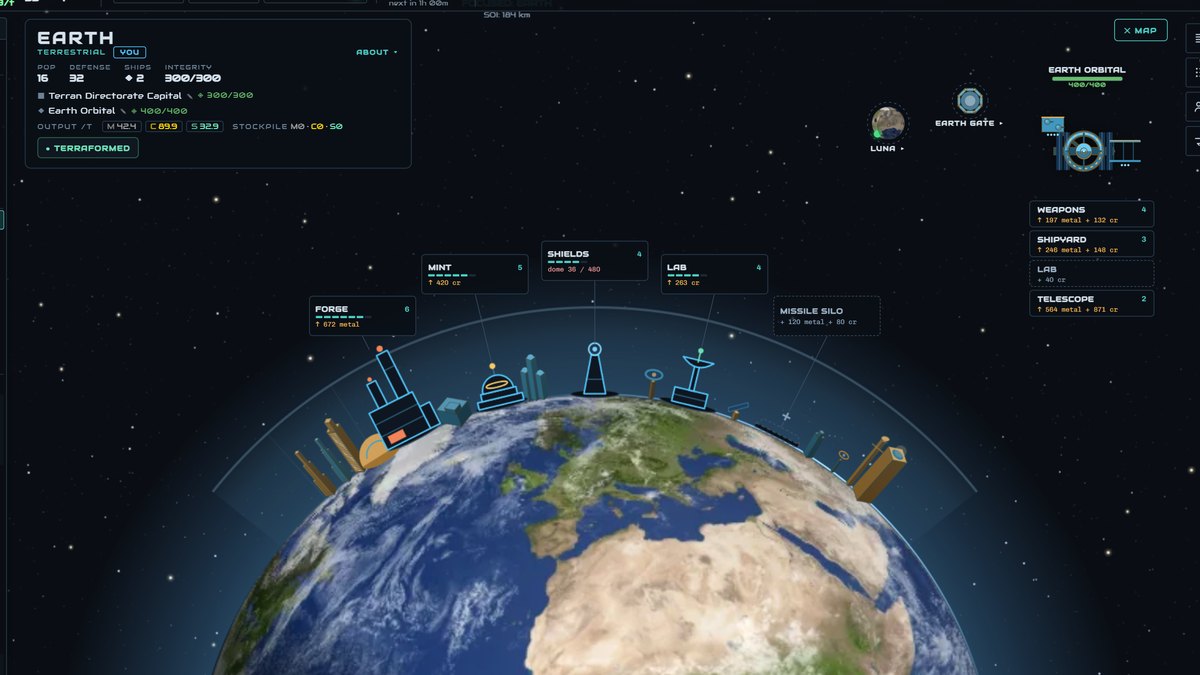
Most space strategy games invent a galaxy. Orbital uses ours: the Sun, the planets and their moons, the asteroid belt and the Kuiper Belt, each where it really is and moving along its orbit.
Orbits change the strategy
Because the planets turn, the distance between Earth and Mars this week is not the distance next month. A short hop today can be on the far side of the Sun later, so choosing when to launch is part of the plan.
Ships accelerate and brake along their course and take real ticks to arrive. A long flight is a commitment your rivals can see coming, and fleets can be caught and fought in mid-flight.
Every world has a job
- Planets and moons take stations in orbit, and cities on the ground once they are terraformed.
- Raw worlds keep 90% of what they mine on the ground until you terraform them with freighter deliveries.
- The asteroid belt, the Kuiper Belt and the Far Reach beyond it, where the metal is.
- Drifting meteoroids can be mined for metal and credits.
- Even the Sun can be claimed. It is where the Dyson Sphere is built.
How a game plays
Two to ten players share one solar system. Ticks resolve hourly by default, and the game keeps running when you log off. You win by Domination, by election as Supreme Chancellor, or by finishing a Dyson Sphere.
Orbital is free with no ads, and nothing that affects the game is for sale. An optional one-time Commander’s Commission ($10) is cosmetic: ship designs, megastructure looks, premium emblems, and your games posted to your own Discord server.
Free · No download · No ads